Metal Organic Frameworks
vs. Activated Carbon
Metal-Organic Frameworks (MOFs)
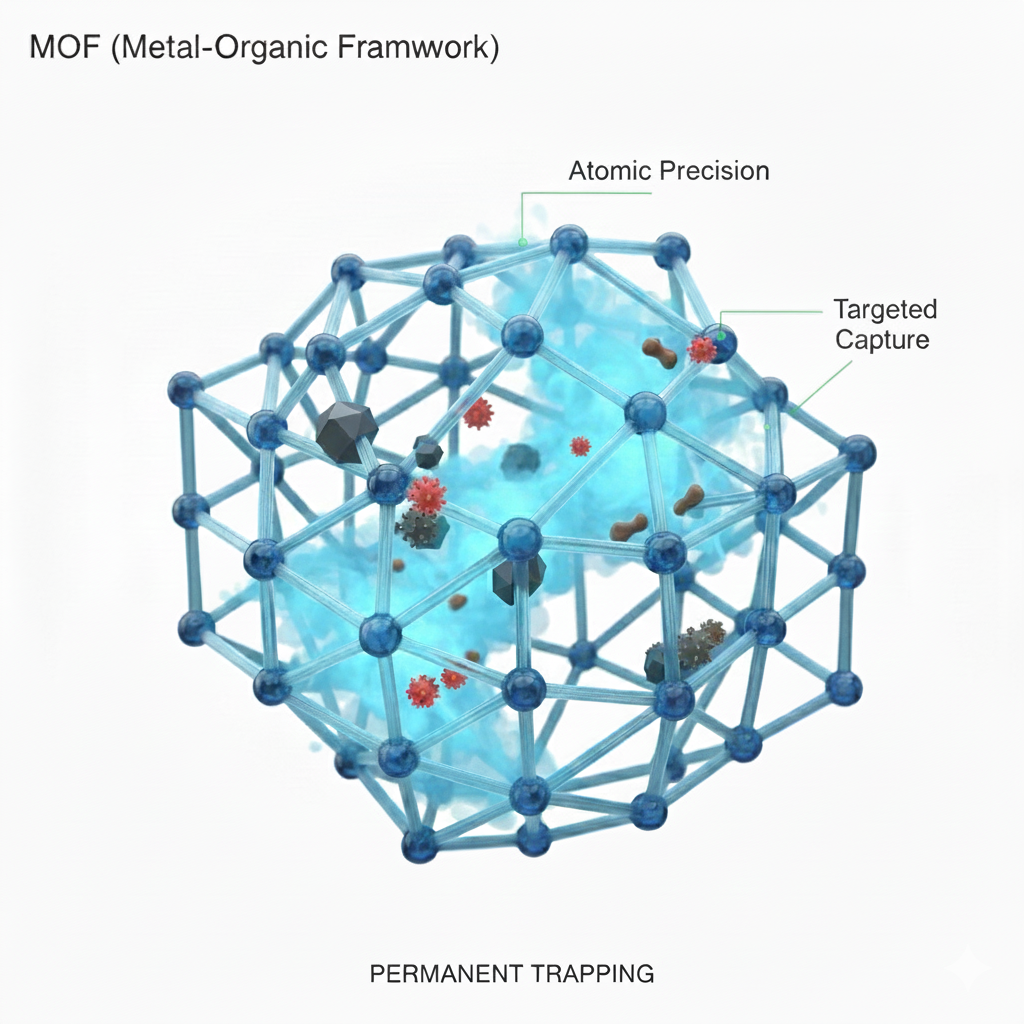
Engineered Precision
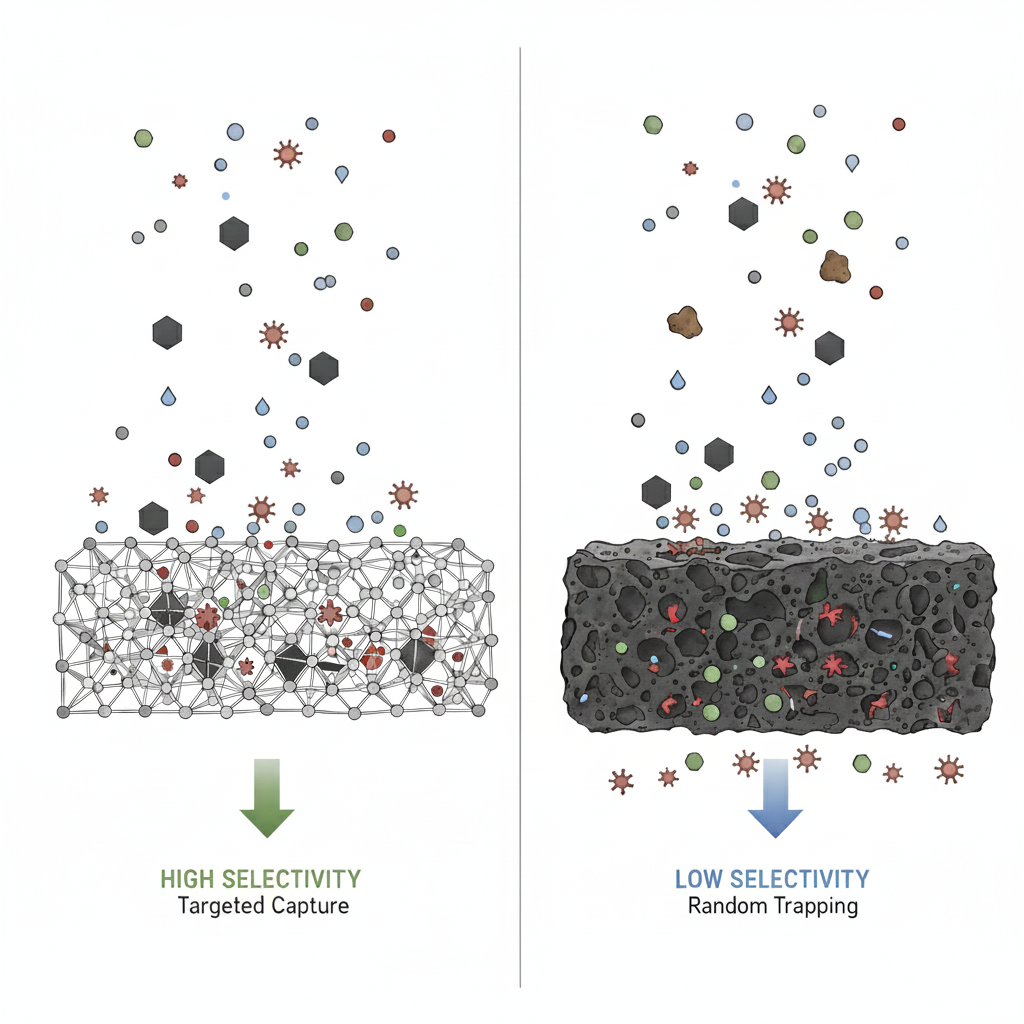
Created with atomic-level geometry, MOFs feature uniform pore sizes designed specifically to trap contaminants like Lead and PFAS.
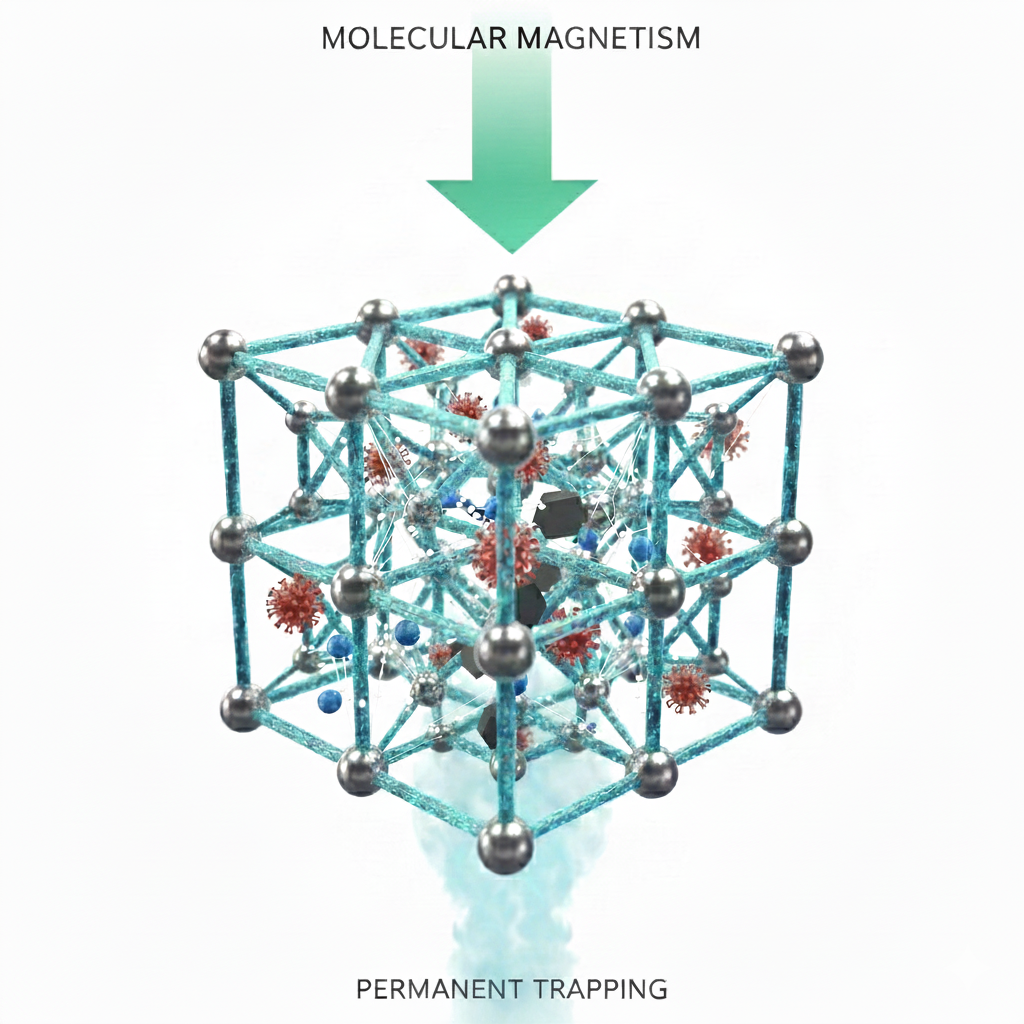
Molecular Magnetism
Strong chemical bonds act as magnets, locking toxins into the structure permanently so they never leach back into your water.
Activated Carbon
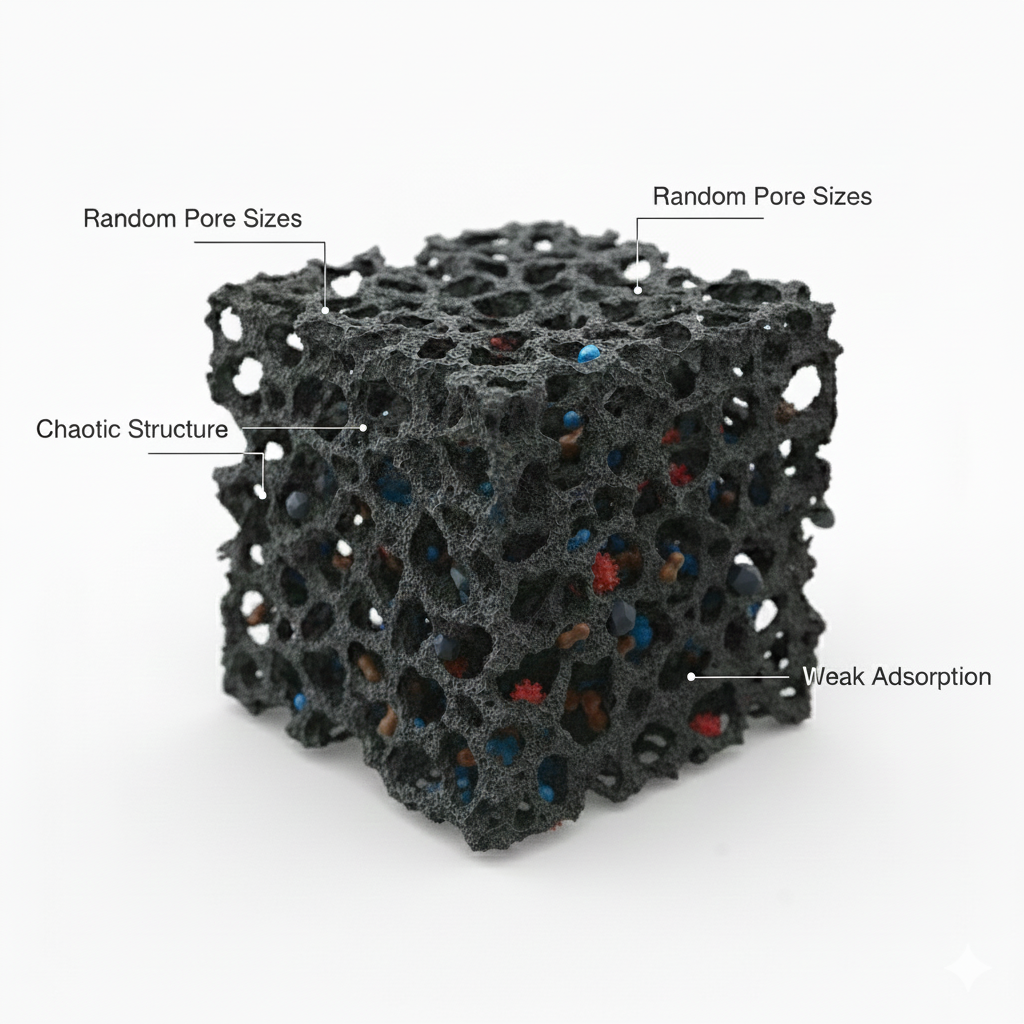
Random Porosity
Made from charred natural materials, resulting in a chaotic “cave system” of pores that vary in size and often miss smaller molecules.
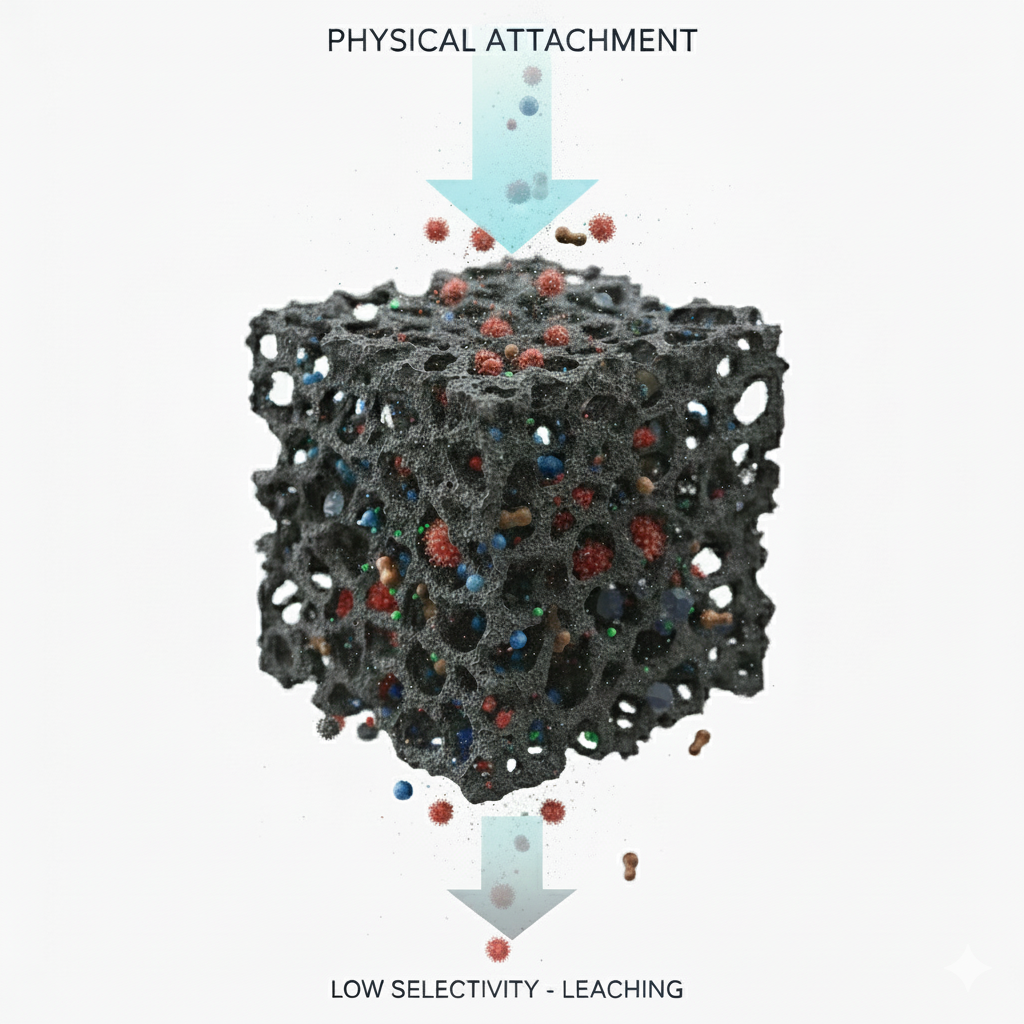
Physical Attachment
Relies on weak physical attraction. Once the surface is “clogged,” toxins can be pushed through the filter by water pressure.
The Selective Advantage
A side-by-side look at how MOFs provide 100% targeted capture versus the inconsistent, “unfiltered” results of traditional carbon.
Introduction
HydroSorb, developed by Watch Water®, utilizes advanced Metal-Organic Frameworks (MOFs) and Covalent-Organic Frameworks (COFs) for unparalleled water purification. By adsorbing harmful contaminants, including Pesticides, Pharmaceuticals, Heavy Metals, and PFAS, it provides an eco-friendly solution to pressing water quality challenges.
HydroSorb is a high-performance adsorber engineered with a unique Ferrophos coating, with advanced COFs and MOFs technologies. It is designed for superior adsorption capabilities, making it ideal for adsorbing various contaminants which are dangerous to both the environment and human health. Additionally, it is a versatile, reusable and regenerable adsorber material suitable for multiple applications.


Key Features – BENEFITS OF HYDROSORB

High Surface Area
HydroSorb offers a massive 6000-6500 m²/g adsorption area, allowing it to capture a wide variety of contaminants more effectively than traditional adsorbers.

Removal Spectrum
HydroSorb tackles everything from organic pollutants like pesticides and VOCs to heavy metals, radioactive materials, and harmful nutrients like ammonia.

Low Maintenance
Its high capacity allows for extended operational life, minimizing the need for frequent regeneration or replacement.

Eco-Friendly
HydroSorb is manufactured using sustainable processes and materials, reducing the overall environmental impact while ensuring powerful water purification.
Targeted Contaminants
Organic Contaminants
- Biological Oxygen Demand (BOD)
- Pesticides (e.g. atrazine)
- Glyphosate
- Herbicides
- Pharmaceuticals
- Industrial Chemicals (Benzene, Toluene, Phenols)
- Polycyclic Aromatic Hydrocarbons (PAHs)
- Volatile Organic Compounds (VOCs)
- Detergents
Inorganic Contaminants
- Fluorides (F⁻)
- Sulfates (SO₄²⁻)
- Chlorides (Cl⁻)
- Chemical Oxygen Demand (COD)
Taste and Odour Compounds
- Hydrogen Sulfide (H₂S)
- Methylisoborneol (MIB)
- Chlorinated Solvents (TCE, PCE)
Heavy Metals
- Lead (Pb)
- Aluminium (Al)
- Mercury (Hg)
- Chromium (Cr)
- Nickel (Ni)
- Copper (Cu)
- Zinc (Zn)
Radioactive Contaminants
- Radon (Rn)
- Uranium (U)
- Radium (Ra)
Nutrients
- Ammonia (NH₃)
- Agricultural Wastewater
- Animal Farming
- Decomposition of Organic Matter
Microbial Contaminants
- Bacteria
- E. Coli
- Salmonella
Emerging Contaminants
- Microplastics
- Personal Care Products
- Endocrine-Disrupting Chemicals
- Nanoparticles
- Forever chemicals



Frequently Asked Questions
HydroSorb is an advanced water purification product developed by Watch Water® that utilizes innovative Metal-Organic Frameworks (MOFs) and Covalent Organic Frameworks (COFs). It is designed to adsorb a wide variety of contaminants from water, making it an ideal solution for industries and municipalities seeking clean and safe water.
HydroSorb’s hydrophilic surface attracts and binds contaminants like organic compounds, heavy metals, and emerging pollutants. Through adsorption, the contaminants are retained on the surface of HydroSorb, ensuring cleaner and safer water. It operates using Van der Waals forces to capture pollutants in its unique pore structure, which includes micro, meso, and macro-pores.
HydroSorb can effectively remove a wide range of contaminants, including:
- Organic contaminants (Pesticides, Pharmaceuticals, VOCs)
- Inorganic pollutants (Fluorides, Sulfates, Chlorides, TDS)
- Heavy metals (Lead, Mercury, Chromium)
- Radioactive contaminants (Radon, Uranium, Radium)
- Emerging contaminants (Microplastics, PFAS, Endocrine Disruptors)
PFAS (Per- and Polyfluoroalkyl Substances) are a group of man-made chemicals that are harmful to human health and the environment. HydroSorb is highly effective in removing PFAS, including types like PFOA, PFOS, PFNA, PFBS, PFHxS, and GenX. These “forever chemicals” are difficult to eliminate, but HydroSorb’s advanced adsorption capabilities target and reduce them to ensure safe drinking water.
HydroSorb is versatile and can be used in various settings, including:
- Municipal and residential drinking water systems
- Industrial wastewater treatment
- Environmental remediation projects
- Air filtration systems
- Applications involving the removal of emerging contaminants like PFAS and microplastics
HydroSorb stands out due to its high surface area of 6000-6500 m²/g, allowing for superior adsorption compared to traditional filtration systems. It targets both organic and inorganic pollutants and is designed with eco-friendly materials and processes. HydroSorb also requires less maintenance and offers longer operational life.
HydroSorb is made from environmentally friendly materials and is produced using sustainable manufacturing processes. Its long-lasting adsorption capacity and easy regeneration process contribute to reducing waste, lowering operational costs, and minimizing environmental impact.
HydroSorb features:
- Surface Area: 6000-6500 m²/g
- Particle Size: 0.6-2.4 mm
- Bulk Density: 730-750 kg/m³
- Operating Temperature: 15-80°C
- Operating Pressure: 2-8 bars
HydroSorb is a cutting-edge solution for water purification, offering superior adsorption capabilities, eco-friendly design, and the ability to tackle emerging contaminants like PFAS and microplastics. It’s suitable for a wide range of applications, from residential drinking water systems to large industrial water treatments. Its easy regeneration process and long-lasting performance make it a sustainable and cost-effective choice.
A NEW ERA IN
WATER TREATMENT
AQUAredox is the world’s first High-Redox Technology, a next-generation granular filtration media that revolutionizes water treatment by Advanced Oxidation-Reduction (Redox) processes.
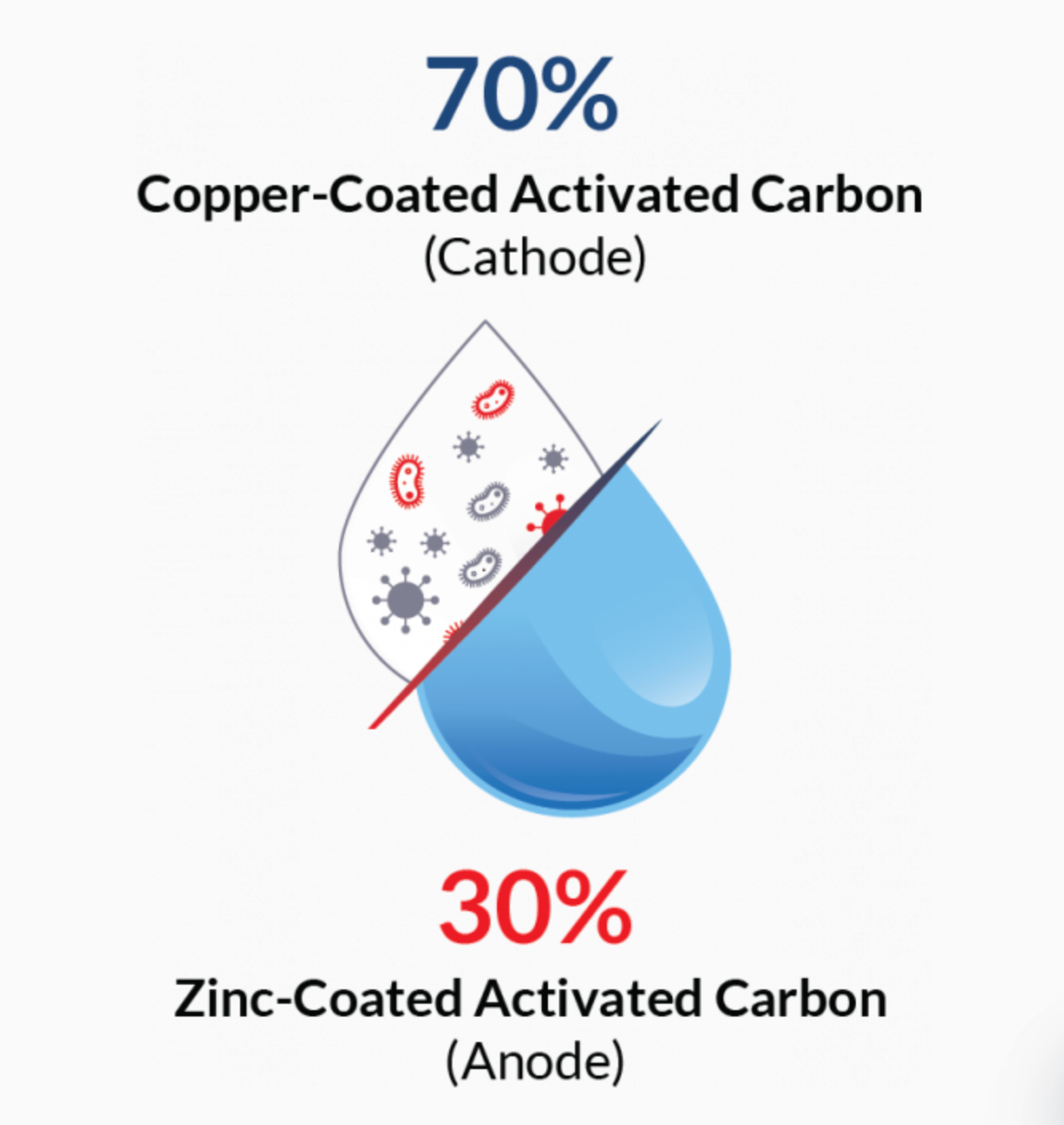
AQUAredox is uniquely engineered using two specialized carbon-based adsorbers:
- Copper-Coated (Cathode)
- Zinc-Coated (Anode)
Together, these two highly conductive, regenerable carbons create an electrochemical Redox reaction that eliminates at an atomic level. This self-sustaining redox cycle ensures superior oxidation, disinfection, and organics removal, including heavy metals, setting a new standard in water treatment efficiency.
Application of AQUAredox

Drinking Water
Municipal, Residential, and Commercial filtration systems.

Industrial Wastewater Treatment
Removal of heavy metals, organic toxins, & industrial waste compounds.

Cooling Water Treatment
Controls biofilm & Prevents corrosion

Reverse Osmosis & Membrane Pretreatment
Reduces biocides completely, reduces biofouling, and improves membrane life.
Key Features & Advantages
Granular High-Resolution Redox Media
- Dual-Coated Carbon Design: 70% Copper-Coated Activated Carbon (Cathode) + 30% Zinc-Coated Activated Carbon (Anode)
- Self-Sustaining Redox Cycle: No external power source required
Electrochemical Advanced Oxidation Process (EAOP)
- Generates Hydroxyl Radicals (OH•) and Sulfate Radicals (SO₄•) for unparalleled contaminant breakdown.
- Provides a continuous source of oxidation without degrading over time.
Sustainable & Non-Toxic
- No Chlorine, Sodium Hypochlorite, Calcium Hypochlorite, Chlorine Dioxide and Chloramines including HOCl.
- Adsorbs THMs & DBPs
- Removes contaminants without adding harmful chemicals to water.
- Fully biodegradable & environmentally friendly
Multi-Contaminant Removal Efficiency
- Generates Hydroxyl Radicals (OH•) and Sulfate Radicals (SO₄•) for unparalleled contaminant breakdown.
- Provides a continuous source of oxidation without degrading over time.
Frequently Asked Questions
What is AQUAredox?
How does AQUAredox work?
What contaminants does AQUAredox remove?
Is AQUAredox environmentally friendly?
Does AQUAredox require frequent maintenance?
Can AQUAredox be used for drinking water?
What is the Empty Bed Contact Time (EBCT)?
Does AQUAredox require external power?
Where can AQUAredox be applied?

FILTERSORB® SP3 INTRODUCTION
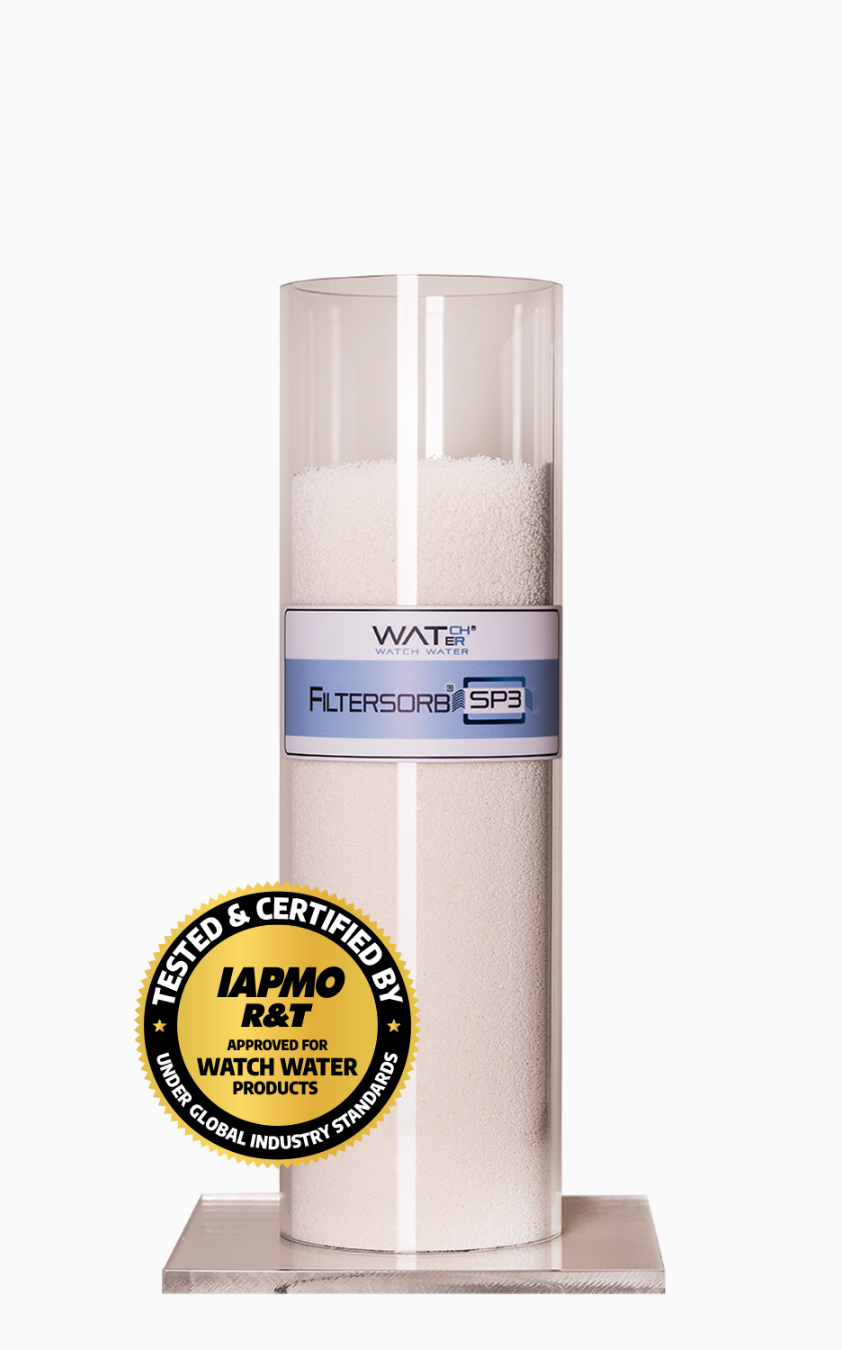
FILTERSORB® SP3 is the result of deep research work along with its undisputable success in the market worldwide. Watch-Water® is the embodiment of new technology called Nucleation Assisted Crystallization (NAC). The transformation of Calcium and Magnesium hardness into non-soluble micro-crystals are the fundamentals of this unique product. In addition, the formed crystals provide essential minerals to the water and making it the healthiest water available. Above all, FILTERSORB® SP3 doesn’t add up any sodium in the water like conventional softeners.
The core motivation for developing FILTERSORB® SP3 was to find a true replacement for the conventional sodium-based water softeners, ion-exchange resins or other chemicals, that are either partially functional or functions at the cost of the environment and health. Similarly, the increased sodium content in water or decreased pH factor (making the water acidic); directly influences the health problems, environmental damage and damage to the systems that are vulnerable to chemical corrosion due to sodium.
The recent restrictions upon many softeners eventually lead to an environmentally friendly, cost-effective and true solution for water softening.
Quick Access

Media Description
Double Layered Coated (DLC) modified ceramic beads (3rd generation).FILTERSORB® SP3 Scale Prevention Method:
Based on Nucleation Assisted Crystallization (NAC) Technology, which is a directed crystallization process where continuous catalytic conversion of Carbonate water hardness into non-soluble sub-micron crystals takes place.
FILTERSORB® SP3 WORKING PRINCIPLE
The Science of NAC
When the hard water under goes nucleation in the pressure vessel, the calcium bicarbonate Ca(HCO3)2 is transformed in form of calcium carbonate CaCO3 crystals. Therefore, these crystals are formed through decomposition and crystallization process, forming very stable and harmless crystals.
The following equation describes the reaction that occurs inside the pressure vessel when flow over grains of nucleation.
Ca(HCO3)2 → CaCO3+ CO2 + H2O
-
The name “SP3 (Scale Prevention)” indicates the unique transformation of water hardness Ca(HCO3)2 into 3 components:
- 1. CaCO3 (micro-crystals)
- 2. CO2 (colloid)
- 3. H2O (pure)
- In the pressure vessel, the equilibrium of carbonate species in water is shifted, assisted by the driving force of stable crystal formation. Therefore, the reaction is pushed to the right. After that, CO2 is being removed and the soluble Ca(HCO3)2 converts into insoluble calcium carbonate (CaCO3) crystals.
- As a result, calcium carbonate crystals grow steadily. However, they are very stable and cannot dissolve (incapable of forming scale) in the water.
- Glass grains crystallization sites provide increased nucleation sites for the formation of submicron sized CaCO3 crystals. Hence, this amazing process is called Nucleation Assisted Crystallization.
NAC –
NUCLEATION ASSISTED CRYSTALLIZATION
Once formed and detached from the surface of FILTERSORB® SP3 media beads, the crystals will not adhere to any other surfaces, even in hot water applications. The crystals cannot form scale because of its stable molecular structure and neutral surface electro potentiality.
-
1. The continuous transformation of water hardness makes the immediate crystal growth possible with unidirectional chemical equilibrium viz.
Ca(HCO3)2 → CaCO3 + CO2 + H2O As CO2 leaves fast the right hand direction of the equation is preserved. - 2. The crystals developing on the surface of the FILTERSORB® SP3 bead grow rapidly and nucleate.
- 3. After a certain period of time the micro-emulsion of CO2 and CaCO3 forms colloid particle and leaves the media bead surface in neutral form. The average dimension of CaCO3 crystal coated globules ranges in sub micro-meter scale. The noted reaction time is normally around 5 seconds.
Micro Crystals and Colloid CO2 : The story behind amazing pH stabilization of FILTERSORB® SP3 treated water
Influence of formed CaCO3 as pH balancing factor:
The reaction: Ca(HCO3)2 → CaCO3 + CO2 + H2O is unidirectional while SP3 is transforming the hardness into water insoluble crystals.
- In nucleation assisted crystallization process formed CO2 leaves as colloid gas and is used as the template by the rapidly growing crystals in the nucleation site.
- Formed CO2 micro-bubbles exists in colloid form and thus does not form carbonic acid to dissolve back the calcium/magnesium crystals
- Hence, the reverse reaction of CO2 with water forming Carbonic Acid is not possible and the pH stability is maintained. In fact, every excess CaCO3 crystals are buffering any carbonic acid leftover. (See Illustrated Presentation)
CERTIFICATION FOR FILTERSORB® SP3
WHY FILTERSORB SP3 IS THE BEST?
Some key points are mentioned here.
- No TDS change: As FILTERSORB® SP3 does not take out or give in anything in the water. As a result of no ion-exchange chemistry, the TDS of water remains unchanged before and after the treatment.
- No pH change: pH of the water remains same. This factor makes the treated water suitable for almost any use where corrosion is concerned.
- Rich Minerals Preserved: FILTERSORB® SP3 does not add up sodium or any chemicals in the water. It simply preserves the Calcium and Magnesium contents of water, making the treated water the healthiest mineral water available. These Calcium and Magnesium are quintessential for nervous systems & muscles functionalities. They are indispensable parts in the cell chemistry of the plants and most of the life forms on earth.
- De-Scaling: Not only does FILTERSORB® SP3 prevents scale formation in water channels, but it also helps to reduce the previously formed scales. The NAC process takes out water dissolved CO2 in almost-visible micro-bubbles forms that help reducing previously formed scale over a period of time (depends on the usage period).
- Biocides: NAC process creates conditions where water dissolved CO2 agglomerate to form micro-bubbles. These bubbles actively destroy bacterial membranes acting as a biocide. So along with the scale prevention FILTERSORB® SP3 also helps preventing Biofouling.
- Test-Kit: A TEST KIT is available to see the performance of this unique scale prevention media within 3-4 minutes, right on the site. Watch Water has also developed a portable unit to perform live demonstrations.
TECHNICAL DATA PACKAGING / MSDS
| Appearance | White/opaque solid granules |
|---|---|
| Composition | Modified ceramic beads |
| Bulk weight | 780 kg/m³ |
| Particle size | 0.55 – 0.75 mm |
| Moisture | 10 – 25% |
| Drums / Pallet | Dimension (L x W x H) | Weight (Volume) |
|---|---|---|
| 1 | 60 x 40 x 80 cm | 50 kg (60 L) |
| 4 | 80 x 60 x 80 cm | 200 kg (4 x 60 L) |
| 6 | 120 x 80 x 80 cm | 300 kg (6 x 60 L) |
| 9 | 120 x 120 x 80 cm | 450 kg (9 x 60 L) |
| 18 | 120 x 120 x 145 cm | 900 kg (18 x 60 L) |
OPERATIONAL PARAMETERS WATER IMPURITIES
| Flow direction | Up Flow |
| Recommended operating temp. (°C) | 5 to 90 |
| pH range | 6.5 to 9.5 |
| Hardness (carbonate), max. ppm | 1400 |
| Salinity, max. ppm | 35000 |
| Iron, max. ppm | 0.5* |
| Manganese, max. ppm | 0.05 |
| Free chlorine, max. ppm | 3 |
| Copper, max. ppm | 1.3 |
| Oil | Free |
| Hydrogen sulfide | Free |
Note: Do not use where water is microbiologically unsafe or with water of unknown quality without adequate disinfection before or after the unit. System must be maintained according to manufacturer’s instructions. Pre-treatment for sediment, Iron, Hydrogen Sulfide, Manganese, hydrocarbons and Copper may be required depending on conditions. Install systems in new facilities with copper pipe after six weeks of water use.
Special Information: FILTERSORB® SP3 has good capacity to absorb Iron, Copper, Manganese, Lead, Zinc etc. Therefore, in high concentration presence of these contaminants the FILTERSORB® SP3 beads may change color and come to an end of the media life. It is also possible that the media might change color due to dye leaching from polyethylene container tanks.
DOWNLOAD LINKS



FREQUENTLY ASKED QUESTIONS
What is Filtersorb SP3?
Filtersorb SP3 is a revolutionary anti-scale media that prevents scale formation without using salt or chemicals. It transforms dissolved calcium and magnesium into aragonite stable non-soluble CaCO3 crystals, which remain suspended in water and do not attach to surfaces. These crystals are formed through the decomposition and crystallization process, forming very stable harmless crystals.
The following equation describes the reaction that occurs inside the pressure vessel when flowing over grains of nucleation (Filtersorb-SP3) Ca(HCO3)2 → CaCO3 + CO2 + H2OThe name “SP3” indicates the transformation of hardness into 3 components: Micro-crystals (CaCO3), Colloid (CO2), and Pure Water (H2O).
What is Nucleation Assisted Crystallization (NAC)?
Nucleation Assisted Crystallization is a chemical-free water treatment process that converts dissolved hardness minerals (calcium and magnesium) into micro and non-soluble micro-crystals that do not adhere to pipes or appliances. This prevents limescale buildup without removing the minerals from the water. Eco-friendly solutions compared to traditional water softeners.
How does Filtersorb SP3 work?
The media uses a physical transformation process called Nucleation Assisted Crystallization (NAC). It converts hardness minerals into microscopic crystals that are stable and do not form scale on surfaces like pipes or appliances. This prevents limescale buildup without removing the minerals from the water.
Is Filtersorb SP3 a water softener?
No, it is not a traditional water softener. Unlike softeners that remove calcium and magnesium ions through ion exchange and replace them with sodium, Filtersorb SP3 retains these beneficial minerals in the water but prevents them from forming scale.
• Nucleation Assisted Crystallization (NAC): No Salt, no regeneration, no wastewater, retains beneficial minerals and prevent scale
• Softeners: Use salt, require backwashing and regeneration, remove calcium/magnesium from the water. NAC is a low-maintenance, eco-friendly alternative that is ideal for scale prevention, not softening.
Does it remove calcium and magnesium?
No, Filtersorb SP3 retains calcium and magnesium in the water but changes their forms to aragonite crystals so they cannot form hard scale deposits.
What are the primary benefits of Filtersorb SP3?
- Prevents scale buildup in pipes and appliances
- Environmentally friendly – no salt, no chemicals, no regeneration
- Retains healthy minerals in drinking water
- Maintenance-free and low operating cost
- Extends life of appliances and improves energy efficiency
Is it certified for drinking water?
Yes, Filtersorb SP3 is tested and certified to NSF/ANSI/CAN 61 & NSF/ANSI/CAN 372 standards with Water Quality Association (WQA) & International Association of Plumbing and Mechanical Officials (IAPMO) for safe use in potable water systems.
What maintenance is required?
Filtersorb SP3 is completely maintenance-free. No regeneration, backwashing, or salt refilling is required. Media replacement is only needed after its service life ends, typically 5–7 years depending on water usage and hardness.
Does NAC-treated water feel different?
No. Since Nucleation Assisted Crystallization (NAC) does not remove calcium or magnesium, the water retains its natural mineral content. It does not produce slippery feel associated with softened water, but it prevents scale formation on surfaces and appliances.
Can Is Nucleation-Assisted Crystallization environmentally friendly?
Absolutely! NAC uses no electricity, no salt, and produces no wastewater, making it a green and sustainable choice for scale prevention. It’s also compliant with global environmental regulations and ideal for areas with brine discharge restrictions.
Can NAC be used with other filtration or treatment systems?
Yes. NAC systems are easily adaptable scale prevention NAC technology and can be installed upstream or downstream of other systems such as: Carbon filters – UV disinfection – Sediment filters
Does it remove existing scale?
Yes, Filtersorb SP3 does more than just prevent scale, it can also help gradually to reduce existing scale deposits over time. As the treated water flows through the system, it interacts with old scale, leading to gradual removal and improved system efficiency. Many users have observed noticeable reductions in scale buildup after continued use.
TITANSORB® INTRODUCTION
Revolutionary adsorbent for the removal of arsenic and heavy metals. TITANSORB® adsorbent is based on titanium dioxide and it has the best arsenic removal capacity in the market: up to 60 g/Kg, offering the longest life span than any other adsorbents. It operates free of regeneration and disposal is non-hazardous.

Loading

pH Range

Purity

Cost
Footprint

Fast Kinetics
SPLIT WATER
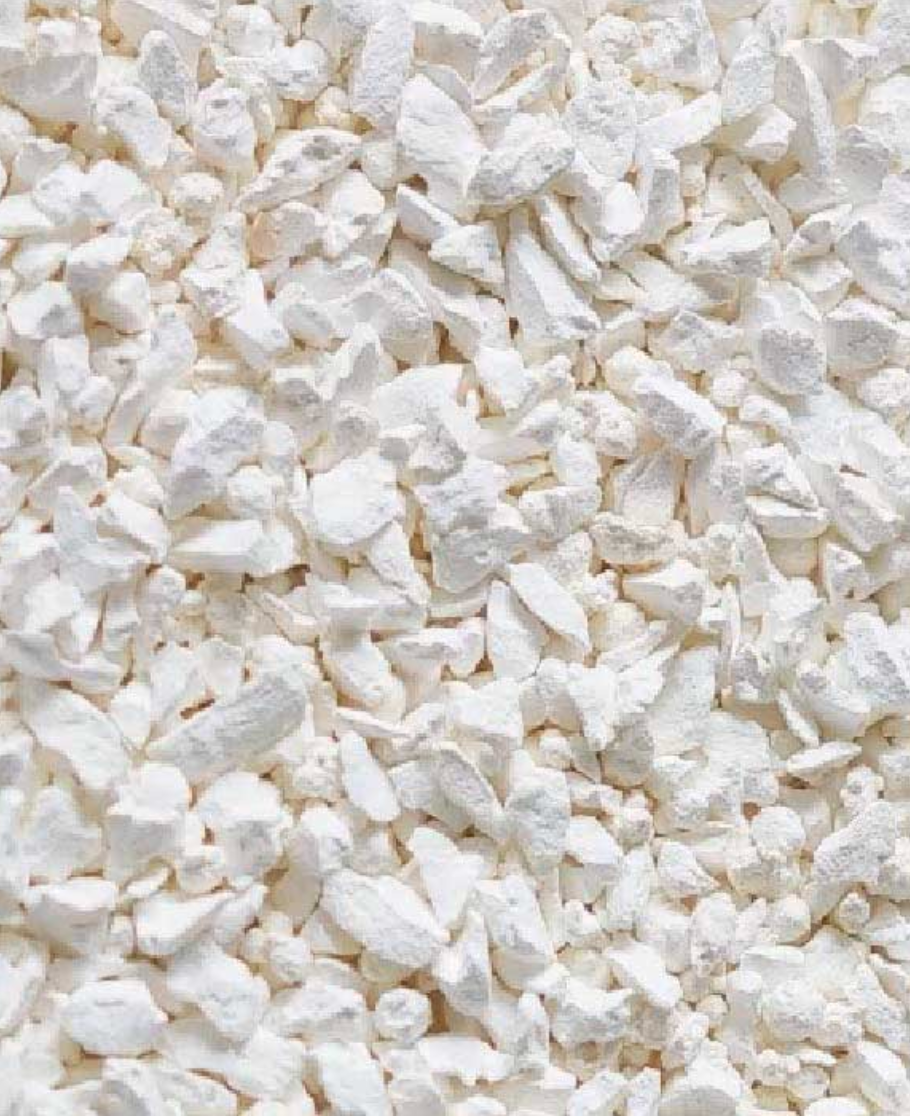
Not only can TITANSORB® granules help split water in H+ and OH–, it can also make water filter Adsorbent hydrophilic – allowing water to flow easily through it, while adsorbing Arsenic, Lead, Selenium and other foreign contaminants, including bacteria making it perfect for purifying water. Thus a new super high capacity (adsorption) powered Adsorbent is developed. With the worlds’ Population expected to hit 8.3 billion by 2030, there will be a massive increase in the Global Demand for Adsorbents. All water and food need Arsenic, Lead, Selenium free drinking water. (See report on Global Adsorbent Market and Watch-Water is one of the major Adsorbent manufacturer.)
TITANIUM DIOXIDE
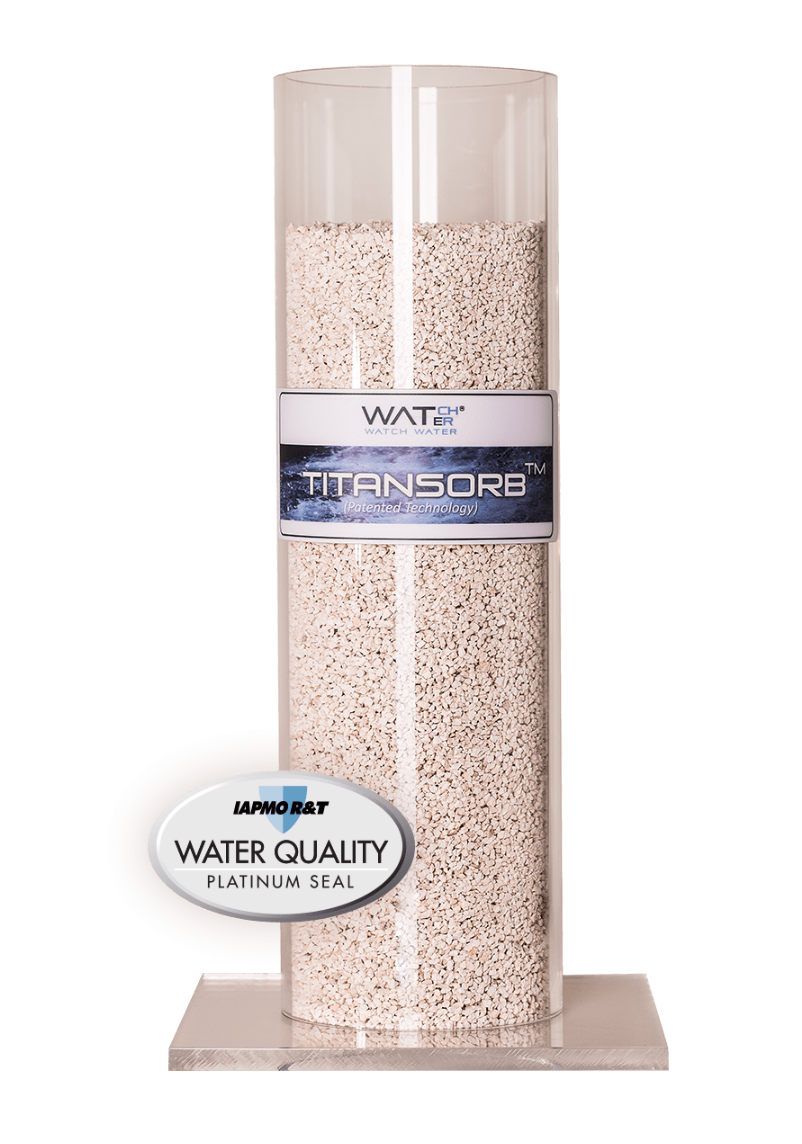
Titanium dioxide is a widely available compound that can be mined from minerals in the ground and is commonly found in food as whitening additives and in sunblock products. TITANSORB a new advanced Wonder Adsorbent that can remove Arsenic (III & V), Antimony, Cadmium, Copper, Chromium (VI), Lead, Zinc, Selenium, Uranium and many other heavy metals and produces Clean-Water. With its superior bacteria killing capabilities, it can also be used to kill bacteria in water. Watch-Water have succeeded in developing a high capacity, revolutionary Adsorbent that can do all the above mentioned at very low cost compared to other Titanium-oxide based existing technology.
This breakthrough, which has taken Watch-Water five years to develop the Double Capacity Titanium dioxide crystals into Patented Adsorbent. TITANSORB, such a low cost Adsorbent is expected to have immense potential to help tackle on going Global Adsorbent Market in Arsenic and Environmental issues of Arsenic Removal.
FREQUENTLY ASKED QUESTIONS
- Point-of-Use (POU) & Point-of-Entry (POE) systems
- Municipal water treatment plants
- Industrial wastewater treatment
- Bottled and mineral water production